
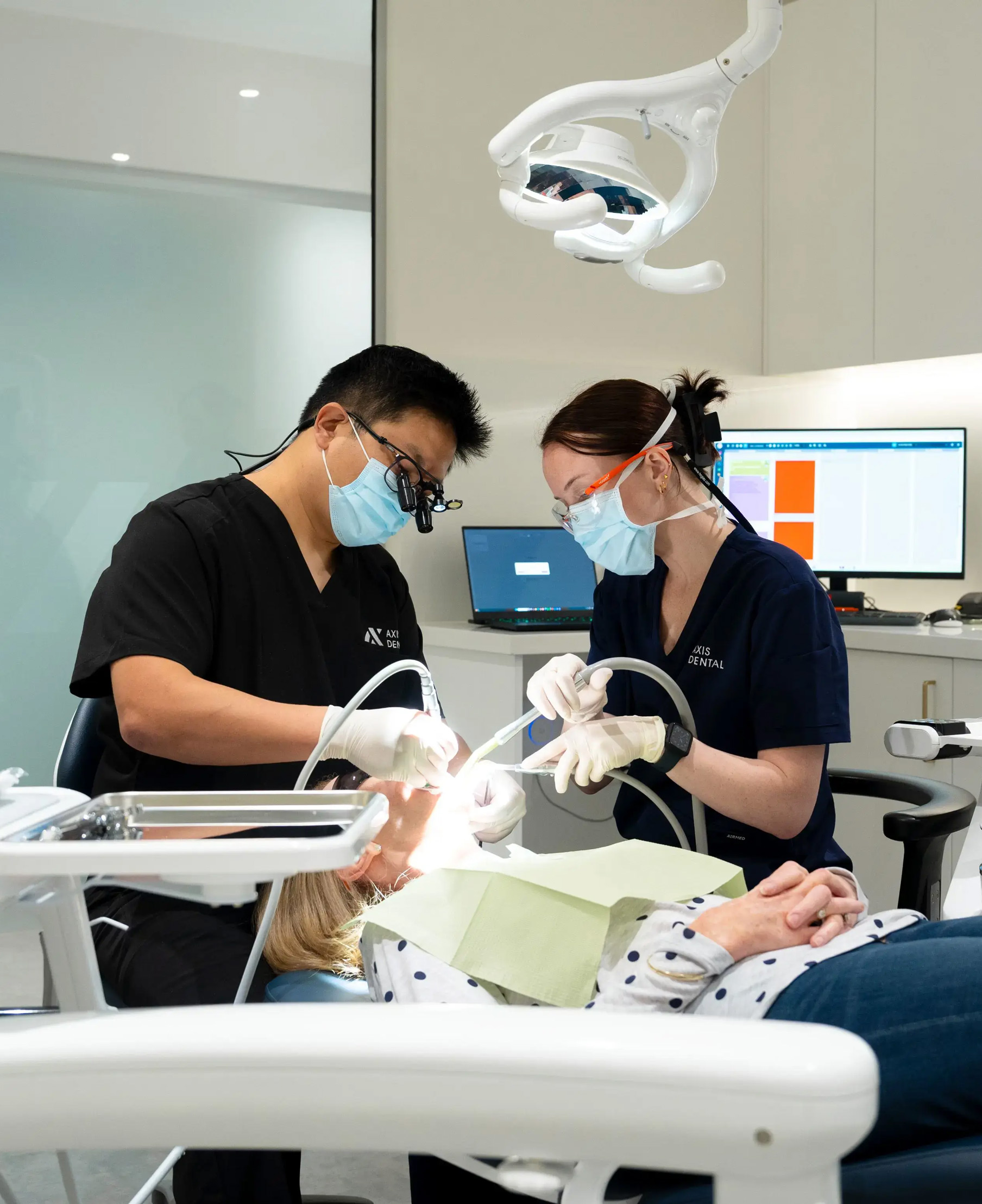

If you are considering getting dental implants, it's understandable to wonder if the treatment will hurt.
Well, the good news is that thanks to modern techniques, effective local anaesthetic, and careful planning, most patients find the procedure very comfortable. Moreover, often, the recovery is more manageable than they anticipated.
Here's what to expect before, during and after dental implant treatment.
Do Dental implants hurt?
Let's get one thing clear. You shouldn't feel severe pain from dental implant surgery. Primarily, this is because the area is completely numbed with local anaesthesia before the dental implant procedure begins. That said, during treatment you may notice some pressure or vibration.
That is because bone has significantly reduced density of sensory nerve fibres, which result in less sensory stimulation like pain, but are more responsive to pressure and inflammation.
After the anaesthesia wears off, it's normal to experience swelling and tenderness around the implant site. While everyone's pain tolerance is different, many patients feel only mild discomfort and manage it with the pain relief recommended by their dentist and good postoperative care.
Many people describe dental implant pain as less severe than they expected, and clinical research supports this. One comparative study measured post-operative pain using a standard 0-10 Visual Analogue Scale (VAS). It found that implant surgery resulted in consistently lower pain scores than having a tooth extracted. The average pain scores were:
24 hours: 2.9 after implant placement compared with 6.1 after a tooth pulled
48 hours: 1.1 compared with 4.3
72 hours: 0.27 compared with 2.4
What You'll Feel During the Procedure
When getting dental implants, your dentist will administer local anaesthesia before the actual implant procedure begins. This will make the treatment area completely numb and enable your experienced dentist to place the dental implant.
Although you won't feel pain, you may notice:
Pressure while the artificial tooth root is being positioned.
Gentle vibration from dental instruments.
Mild pulling or pushing sensations during the procedure.
These sensations are completely normal and are very different from the sharp pain people often expect.
For anxious patients or those undergoing more complex dental procedures, sedation options may be available. However, this will depend on what type of dental implant treatment you are scheduled to have.
If fear of treatment has kept you from replacing missing teeth, here is how to manage your dental anxiety.
Dental Implants Recovery Timeline
While every person heals at a slightly different pace, the recovery process after dental implant surgery generally follows this predictable pattern.
First 24 Hours
Once the anaesthesia wears off, it's common to notice some tenderness around the surgical site. You may experience:
Mild bleeding or oozing
Minor discomfort around the implant site
Swelling beginning to develop
Tightness when opening your mouth
This type of implant pain usually peaks around six hours after surgery before steadily improving. You can manage pain and reduce swelling when experiencing it by taking the recommended pain medication, applying a cold compress and resting.
Days 2 to 3
Persistent discomfort and swelling are often at their worst around 48 hours after surgery. But it will start to settle. You may find that bruising around the cheeks or jaw may also become more noticeable.
At this stage, you can continue to:
Eat soft foods or follow a soft diet
Keep up good oral hygiene without disturbing the implant
Attend to any post-operative instructions provided by your dentist
Days 4 to 7
Most of the soreness will have settled by the end of the first week after the implant procedure. You may still notice slight sensitivity when chewing. But many patients are able to return to their usual daily routine.
Weeks 2 to 16
By now, most people have little or no discomfort, provided they maintain good oral health. However, while the area may feel normal, an important stage of the healing process is still taking place beneath the surface.
During this time, the implant fuses with the surrounding jawbone through a biological process called osseointegration. This creates the stable foundation that is needed to support the dental crown or final restoration.
Managing Discomfort After Surgery
When recovering from dental implant surgery, there are a few things you can do to minimise discomfort and support a smooth recovery in the first few days. They include:
Applying a cold compress to the outside of your face during the first 24 hours to reduce swelling.
Eating soft foods for several days and avoiding hard or crunchy foods until your dentist advises otherwise.
Begin gentle warm saltwater (saline) rinses after the first 24 hours to keep the area clean.
Avoid smoking and using straws. (Both can interfere with healing).
Sleep with your head elevated for the first few nights to help reduce swelling.
Follow your dentist's advice regarding pain medication to relieve pain.
Attend all follow-up appointments so your dentist can monitor healing.
Is a Full-Arch, Zygomatic, or Pterygoid Implant More Uncomfortable Than a Single Implant?
The answer to this question really depends on the type of treatment you're having. But the difference isn't always as large as people expect.
A single dental implant, for instance, usually causes minimal discomfort because only one implant placement is involved. By contrast, studies have shown that placing a greater number of implants can increase pain levels during the first few hours after surgery. So, your patients may experience more initial soreness with a full-arch procedure.
For patients with significant bone loss, zygomatic or pterygoid implants can also offer a desirable alternative. In suitable cases, these specialised implants may avoid the need for a separate bone grafting procedure before dental implant placement. While every patient is different, skipping graft surgery can mean a shorter overall treatment and faster recovery.
During your dental implant consultation, your dentist will discuss which option best suits your mouth, your health and your long-term goals.
How Does Dental Implant Pain Compare to Other Dental Procedures?
Many people assume implants are among the most painful dental treatments you can get. But research suggests otherwise.
As mentioned earlier, studies have found that dental implants hurt significantly less after surgery than tooth removal. This is partly because implant surgery is carefully planned so as to achieve minimal unnecessary trauma to the surrounding tissues.
The recovery process is also generally comparable to or less demanding than recovery after wisdom teeth removal. While some swelling and tenderness are expected, many patients report that implant discomfort is usually well controlled and continues to improve each day.
Signs Your Pain Isn't Normal
While you should expect some tenderness after implant surgery, the symptoms should gradually improve during the first week. However, if they don't or you experience any of the following, then contact your dentist immediately:
Pain that worsens rather than improves after day four.
Persistent discomfort that doesn't improve with the pain management strategies you've been recommended.
A fever or feeling generally unwell.
Visible pus or discharge around the implant site.
Swelling that won't go down or even increases.
Numbness that doesn't improve after the local anaesthetic should have completely worn off.
Managing Dental Anxiety Before Treatment
For many people, dental anxiety is a major concern in the lead-up to their treatment. If this is something you are suffering from, make sure you let your dentist know beforehand.
They will take the time to explain the procedure, answer your questions, and discuss the available sedation options. All of which can make the experience much more comfortable.
Frequently Asked Questions
Does getting a dental implant hurt?
Like any procedure, dental implant surgery carries the possibility of discomfort for patients. The dental implant procedure itself should not hurt because the area is made completely numb using local anaesthesia. However, you may notice pressure or vibration during implant surgery. After the procedure, most people experience minimal pain or mild discomfort for a few days.
How long does pain last after a dental implant?
For most patients, their discomfort is greatest during the first 24 hours. After which, it starts to ease. Swelling often peaks around the second day, before notably improving. Most people feel pain-free within a week of post-operative care.
Do zygomatic or pterygoid implants hurt more than a standard implant?
Although these procedures are more advanced, they are commonly performed under sedation or appropriate anaesthesia. Subsequently, you shouldn't feel pain during surgery. In some cases, they can even reduce the overall recovery period by avoiding the need for a separate bone grafting procedure before implant treatment.