
If you're missing most or all of your teeth, or you're facing the prospect of having failing teeth removed, All-on-4 dental implants could be a good long-term solution.
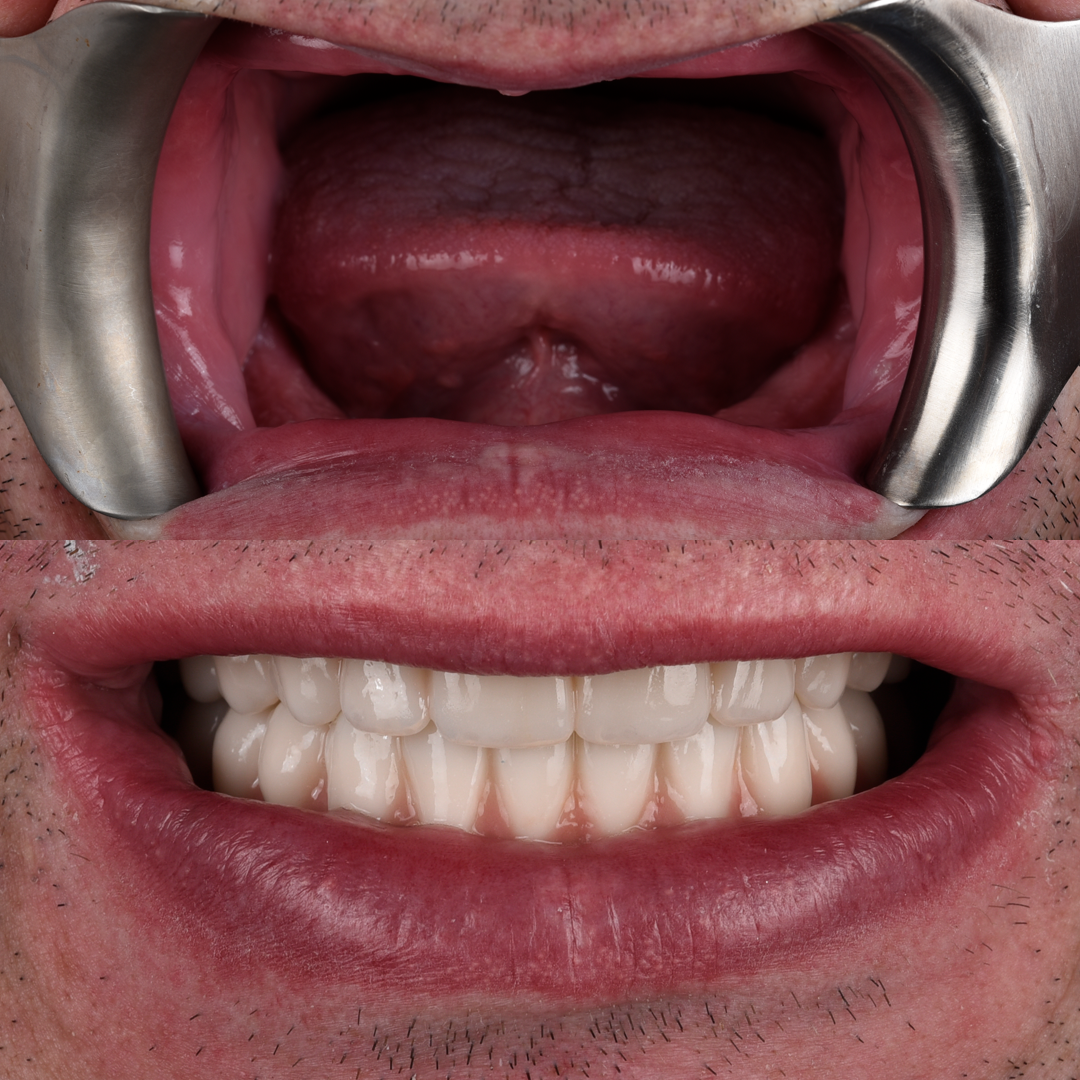
Instead of replacing every tooth with a separate implant, this treatment uses four carefully positioned implants to support a full set of fixed replacement teeth. When successful, it can restore your smile, improve your ability to eat and speak, and help to preserve your jaw bone.
What Are All-on-4 Implants?
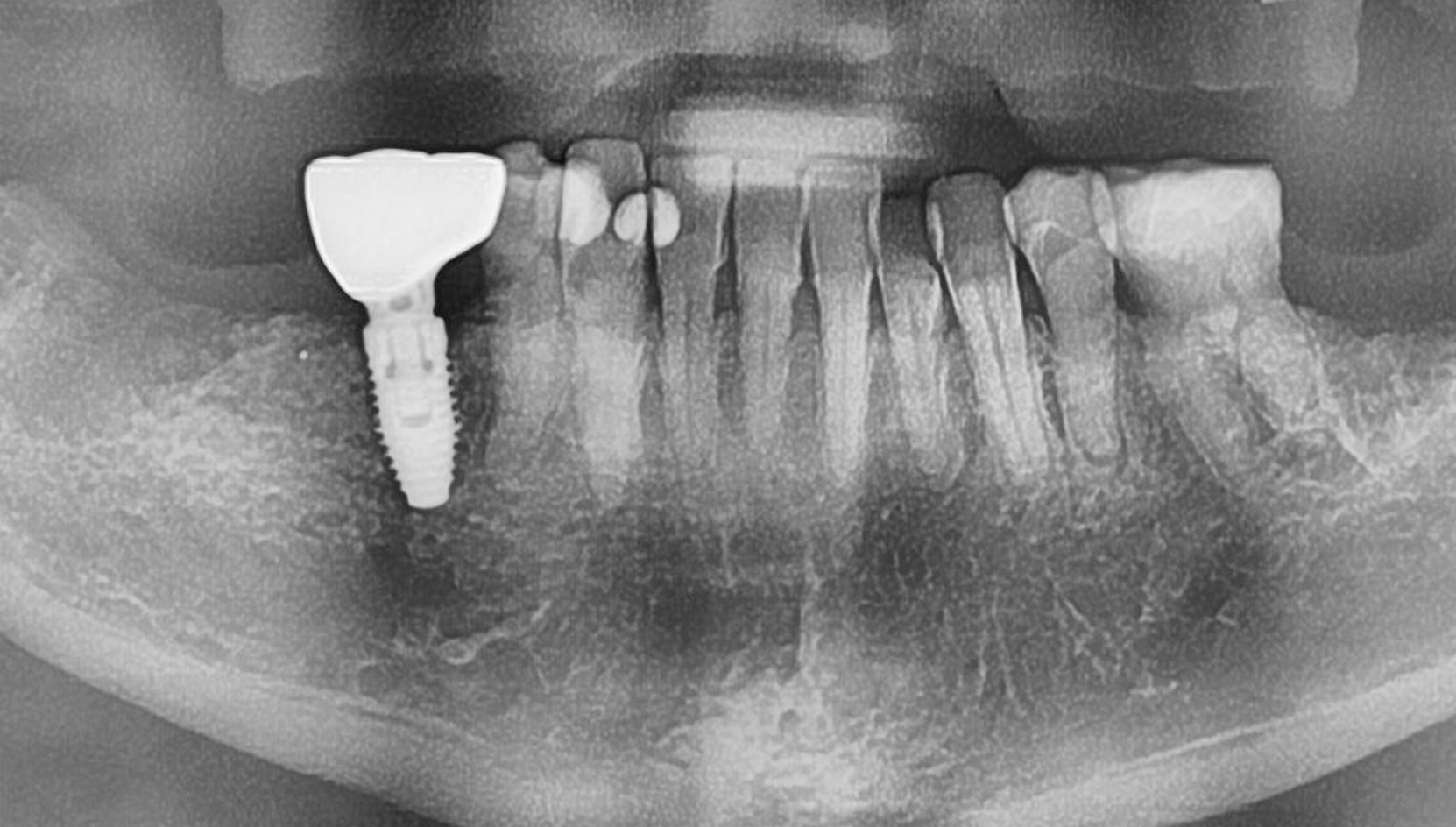
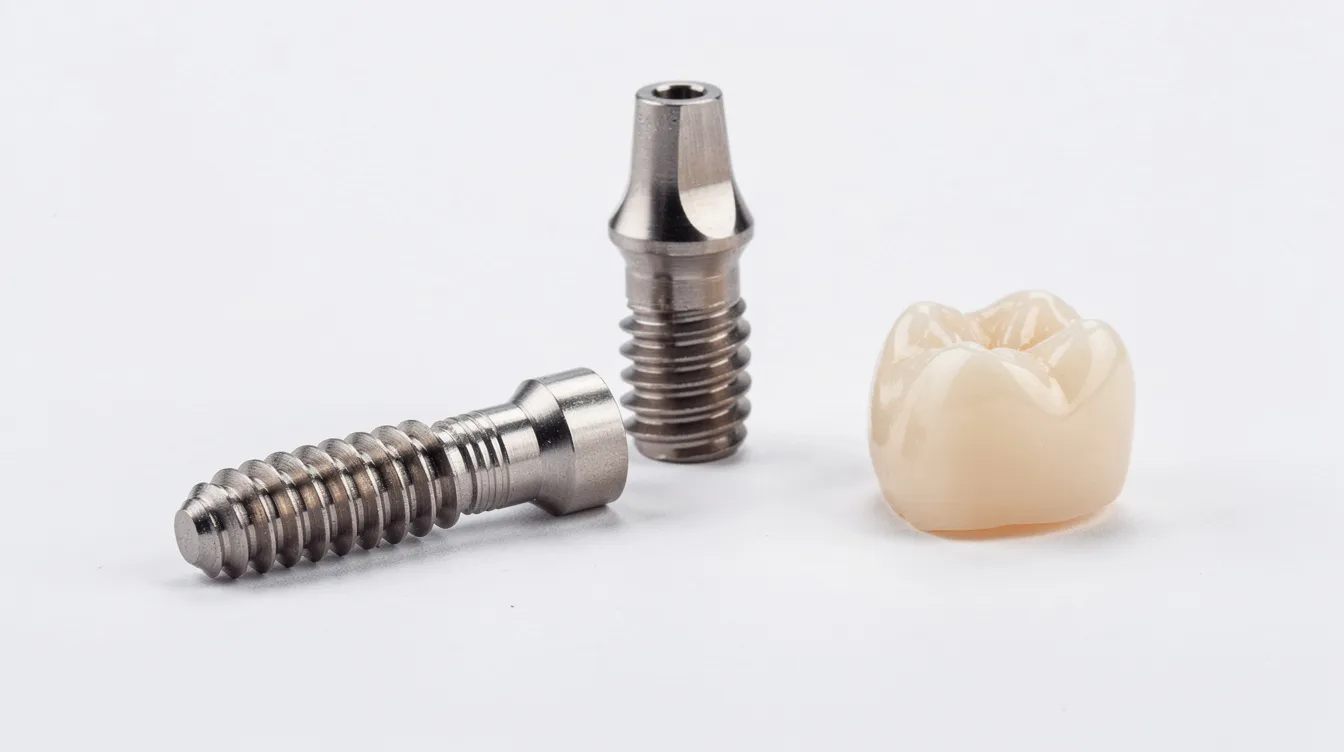
All-on-4 is a full-arch treatment that uses dental implants to replace an entire arch of missing teeth or failing natural teeth. As its name implies, it does this using just four implants. Rather than placing one implant for every single tooth, the four strategically positioned titanium implant fixtures provide the support needed for a full set of permanent teeth.
This approach offers a permanent solution for people experiencing significant tooth loss. Many see it as an appealing alternative to traditional dentures or multiple single implants.
How the All-on-4 Technique Works
The success of all-on-4 implants largely depends on how the implants are positioned. Essentially, two sets of four dental implants are placed vertically at the front of the upper or lower jaw, where the bone is usually strongest. As these two posterior implants are angled towards the back, they engage denser bone while avoiding important structures such as the sinus in the upper jaw.
Because the implants make use of existing healthy bone, it means that many patients can avoid bone grafting. In suitable cases, a provisional fixed full-arch prosthesis with temporary teeth can even be attached on the same day as implant surgery. This enables patients to leave with fixed teeth while the implants heal.
A Brief History of All-on-4
Modern implant dentistry is based on Professor Per-Ingvar Brånemark's discovery of osseointegration at Lund University in Sweden in 1952. However, the All-on-4 protocol itself was developed much later.
Portuguese dentist Dr Paulo Malo is generally credited as developing the technique when working with Nobel Biocare, treating the first patient in 1998. The system was commercially introduced in 2004.
Today, "All-on-4" is a registered trademark of Nobel Biocare. That said, many clinics offer similar full-arch treatments using different implant systems.
Who Is a Good Candidate for All-on-4?
You may be an appropriate candidate for All-on-4 dental implants if you:
Have lost most or all of your lower teeth or upper teeth.
Have remaining teeth that cannot be saved because of damage or gum disease.
Have enough bone in the front of the jaw to support 4 dental implants.
Are in good general health following a review of your medical history and any risk factors.
It is worth noting that patients with advanced bone loss may still be suitable. However, alternatives such as zygomatic implants may be recommended instead.
The All-on-4 Treatment Journey
If you are interested in all-on-4 treatment for your missing teeth, here is what to expect during the process.
Consultation and Digital Planning
Your treatment will begin with an initial consultation, followed by a thorough examination, and then digital scans and 3D imaging. This allows your dentist to perform a range of tasks, including:
Assessing your bone quality
Reviewing your oral health
Planning your implant placement
Using digital smile design to create your future smile
Surgery Day
The next stage of the process is the implant procedure. This will involve placing four implants in the jaw, followed by a fixed prosthesis with temporary teeth. You'll also receive instructions and pain relief medication to help with your early recovery.
Healing and Osseointegration
Over the next three to six months, the healing process will allow the implants to bond with the surrounding bone. Maintaining good blood flow, oral hygiene, and proper aftercare will all help to ensure the implants heal correctly. You'll attend regular follow-up appointments throughout this stage.
Final Permanent Prosthesis
Once healing is complete, your temporary bridge is replaced with a custom final prosthesis.
Benefits of All-on-4
When compared with removable dentures, All-on-4 can offer patients the following advantages:
Fixed replacement teeth that don't move while eating or speaking.
Fewer implants than required for traditional implants
No need for bone grafting
Immediate function with new teeth
Improved comfort, confidence and a more confident smile
Better support for the underlying bone than full dentures
Potential Risks and Limitations
As with all dental procedures, you should be aware that All-on-4 carries some risks.
Some possible complications include infection, implant failure, screw loosening, and wear of the prosthetic bridge over time.
Additionally, not everyone has enough suitable bone in the front of the jaw, which means the standard protocol may not be appropriate.
If you smoke, have uncontrolled diabetes, or maintain poor oral hygiene, it may also affect your healing.
Is All-on-4 Always the Right Number of Implants?
All-on-4 is a proven treatment. However, every patient's anatomy is different. Subsequently, some people may benefit from having five or six implants for additional support. Moreover, those with extensive bone loss may require zygomatic implants or pterygoid implants instead of standard back implants.
As these advanced techniques anchor implants into stronger bone outside the resorbed jaw, they can be good options when traditional All-on-4 isn't suitable.
All-on-4 vs Traditional Dentures
Unlike traditional or implant-retained dentures, All-on-4 implants are fixed permanently. This means you do not need to remove them every day.
Traditional or custom dentures also rest on the gums, so they may become loose as the jaw changes over time. However, as implants stimulate the underlying bone, they can help slow down the ongoing bone loss.
All-on-4 vs Traditional Multiple Implants
Traditional full-mouth rehabilitation may require six to eight or more implants across the arch. All-on-4, on the other hand, achieves similar goals using fewer implants. This reduces treatment time and, in many cases, its overall cost.
Notwithstanding, the right option will always depend on your individual bone volume and treatment goals. If you only need one missing tooth replaced, for instance, you may be better suited to single dental implants.
How Long Do All-on-4 Implants Last?
Clinical research shows that when properly maintained, All-on-4 style implant treatment has cumulative implant survival rates of approximately 95% to 98% over a five- to ten-year period.
However, while the implants themselves can last for decades, the bridge on top may require repair, relining, or replacement after about 10 to 15 years due to normal wear. Of course, they can last longer with proper care.
Cost of All-on-4 in Australia
The cost of all-on-four implants will vary depending on a range of factors. These include your individual needs, the materials selected and whether additional treatment is required.
At Axis Dental, we provide a tiered pricing structure which helps patients to understand what is included. We also always give you a personalised quote for the cost of treatment after your clinical assessment.
Caring for All-on-4 Implants
Your replacement teeth can't develop decay. But the surrounding tissues still need care. That is why it is important to brush around the bridge twice daily. Also, we recommend cleaning under the gum line using a water flosser or superfloss, and attending six-monthly reviews with your dentist or oral health therapist.
Frequently Asked Questions
What is the main purpose of All-on-4 dental implants?
The purpose of All-on-4 is to provide a long-term teeth replacement solution for people missing most or all of their teeth. Instead of relying on removable denture teeth, four implants support a fixed bridge. This helps patients enjoy a stable bite and a new smile.
How long does healing take after All-on-4 surgery?
Following the surgical procedure, it takes around three to six months for the implants to integrate with the jaw bone. It is completely normal to experience mild swelling and discomfort during the first few days after the treatment. Your dentist will monitor your progress throughout the entire procedure.
Do All-on-4 implants feel like real teeth?
Once healing is complete, many patients say their replacement teeth feel very similar to natural teeth. Each implant acts like a small titanium screw within the jaw. This creates a secure foundation that can help you feel confident when speaking and smiling and eat foods more comfortably.
What happens if I don't have enough bone for All-on-4?
If you do not have enough bone, it doesn't always rule out implant treatment. Instead, depending on your situation, alternatives recommended by the Australian Dental Association, such as All-on-X, zygomatic implants or pterygoid implants, may still help you achieve a functional, natural-looking result.