
When you lose one or multiple teeth, it can affect much more than just your smile. It can also change the way you eat, speak and feel about yourself.
Both dental implants and dentures are possible options for replacing missing teeth. Each offers different advantages.
If you're weighing up dental implants vs dentures to determine which is best for you, it's worth taking the time to understand how each option works. And what either could mean for your long-term oral health.
Here's what you need to know before making a decision.
The Short Answer
Inherently, neither dental implants nor dentures is a better or worse option than the other. Instead, the right option for you will depend on various factors. They include your:
Bone volume
Gum health
Budget
Personal preference
What you want to achieve
The best way to determine this is to consult with an experienced implant dentist. They will recommend the most appropriate course of action based on your individual circumstances.
What Are Dental Implants?
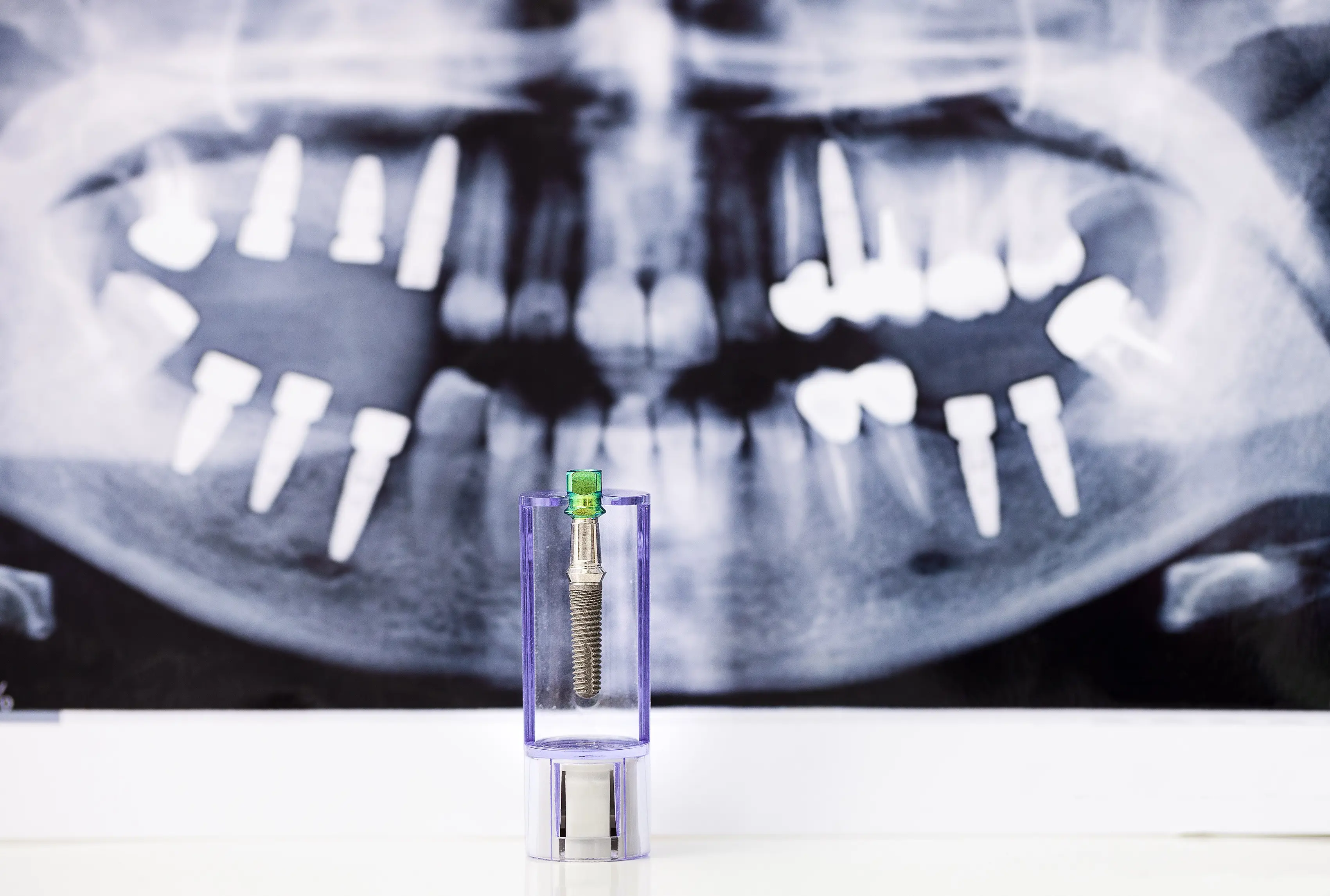
Dental implants are a permanent tooth replacement option designed to look, feel, and function much like your natural teeth. They consist of:
A titanium implant placed into the bone
An abutment that connects the implant to the restoration
A custom-made crown that looks and functions like a natural tooth
Each implant is placed into the jawbone during a carefully planned dental implant process. As the implant heals, a process called osseointegration kicks in. It allows the implant to fuse with the surrounding bone. Thereby creating a stable foundation for replacement teeth.
Unlike dental bridges, implants don't rely on neighbouring teeth for support. Instead, they function independently. In doing so, they help to protect the remaining natural teeth while restoring your chewing ability and appearance.
What Are Dentures?
Dentures are removable replacement teeth that sit on the gum tissue. They have been used successfully for decades to restore a person's smile after tooth loss.
There are two main types of dentures:
Complete dentures: They replace all the teeth in the upper or lower jaw.
Partial dentures: They replace a few missing teeth and fit around your adjacent teeth.
Modern dentures are comfortable and natural-looking. They also restore appearance and basic function. However, unlike implants, traditional removable ones don't replace the tooth roots. Instead, they sit directly on the gums and are held in place by suction, clasps or adhesives.
Dental Implants vs Dentures: Side-by-Side Comparison
Here's a quick overview of the main differences between dental implants and dentures.
Feature | Dental Implants | Dentures |
|---|---|---|
Fixed or removable | Fixed solution | Removable |
Average lifespan | Often lasts for decades with proper care | Typically 5–8 years before replacement or major adjustment is required |
Bone preservation | Supports jawbone health and bone preservation | Bone resorption continues over time |
Comfort | Feels similar to natural teeth | May move if lacking teeth for retention, or feel bulkier when covering more soft tissue |
Eating | Strong biting force for most foods | Some foods can be difficult to chew |
Speech | Stable with clear speech | May cause slight changes in phonetics initially |
Maintenance | You can brush and floss like natural teeth | Remove daily for cleaning |
Appearance over time | Helps maintain facial structure | Bone loss can change facial appearance |
Upfront cost | Higher | Lower upfront cost |
Long-term value | Long-term solution with fewer replacements | Ongoing relines, adjustments and replacement costs |
Bone Health, the Difference That Matters Most Long-Term
Probably the biggest difference between implants vs dentures isn't how they look. But rather how they affect your jawbone.
Every natural tooth stimulates the surrounding bone when you bite and chew. However, after tooth loss, that stimulation disappears, which can cause the jawbone to shrink. This gradual process is known as bone resorption.
As traditional dentures rest on the gums rather than the bone, they cannot stop this process. Subsequently, as bone resorbs, dentures typically become looser. This makes eating and speaking more difficult while gradually changing your facial structure.
Dental implants, on the other hand, offer a completely different approach. Mainly, this is because, as they act as artificial tooth roots, they continue stimulating the bone after healing. This helps to preserve your jawbone density. It also supports your long-term bone health and reduces further bone loss.
For those who have already experienced significant bone loss, procedures such as dental bone grafting may be recommended to rebuild sufficient bone density before implant placement.
What If You've Already Lost Significant Bone?
After wearing traditional dentures for years, many patients believe they've missed their chance for dental implants. But fortunately, that's not always the case.
If the bone beneath your dentures has significantly reduced, then there are advanced treatment options that may still provide a fixed solution. In some cases, bone grafting can completely rebuild the upper or lower jaw before implant placement takes place.
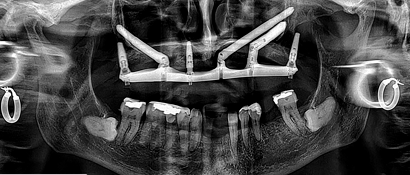
For patients with more severe bone loss, specialised implants offer another path. Zygomatic implants, for instance, anchor into the cheekbone. Pterygoid implants, on the other hand, are secured into the pterygoid plate at the back of the upper jaw. These techniques allow many patients with significant bone loss to receive full dental implants without extensive grafting.
Comfort, Function and Speech
One thing you should be aware of about dental implants and dentures is how differently they perform in everyday life.
Because implants are anchored into the jaw, they remain stable while eating, laughing and talking. This means that most patients can comfortably eat foods that are otherwise difficult to consume with removable dentures. Similarly, speech usually feels natural because the replacement teeth stay firmly in place. (There's also no need for adhesives).
By comparison, if you wear traditional dentures, they can sometimes shift while chewing or speaking. This can often happen in the lower jaw, where there is less natural suction. Some people may also experience gum soreness while adjusting to new dentures or after their jaw shape changes.
Cost: Upfront vs Long-Term Value
You should be aware that conventional dentures have a lower upfront cost than implants. For many patients, this makes them an attractive option.
However, it's also important to consider long-term value because dentures typically require relining, repairs or replacement every five to eight years, as the jaw continues to change shape. Over time, these ongoing costs can add up to significant sums.
Although dental implants require a greater initial investment, they are, at least, designed as a long-term solution. In fact, with good oral hygiene, regular dental check-ups and routine maintenance, implants can last for many years. All while helping protect your oral health and jawbone health.
At Axis Dental, we offer transparent tiered All-on-X pricing to our patients, which should make it easier for them to understand their treatment options.
The final cost to you will always depend on your individual clinical assessment. The results of which will be influenced by your bone volume, whether you have healthy gums and your overall treatment requirements.
You can learn more about our pricing & payment Options here.
The Middle Ground: Implant-Supported Dentures
For some patients, the ideal solution isn't determined by choosing between dental implants vs dentures. It is actually derived by combining both.
For them, implant-supported dentures use a small number of implants to secure a removable denture. Often called snap-in dentures, they attach securely to implants but can still be removed for cleaning.
When compared with traditional removable dentures, these options are:
More stable while eating and speaking.
Less likely to move or rub.
Better at supporting the jaw than conventional dentures.
More affordable than replacing an entire arch with fixed implants.
For many patients, this solution offers the comfort and function they need at an affordable cost.
Can You Switch From Dentures to Implants Later?
Many patients who begin with full dentures later decide they want a more permanent solution. Your eligibility to do so largely depends on your remaining bone volume and overall dental health.
Our dentists can explain the benefits dental implants offer and advise on your suitability for them.
Who Is Each Option Best Suited For?
Generally speaking, dental implants may be ideal if you:
Want a fixed, long-term solution.
Have sufficient bone density or bone that can be restored.
Want to protect your remaining natural teeth and jawbone.
Prefer replacement teeth that closely resemble natural teeth.
Are suitable for implant surgery.
Dentures, on the other hand, may be more suitable if you:
Need the lowest possible upfront cost.
Prefer to avoid surgery.
Need a temporary or immediate tooth replacement option.
Have health factors that currently prevent implant treatment.
Frequently Asked Questions
Are dental implants better than dentures?
For many patients, implants provide a fixed solution that helps prevent bone loss and generally feels more like natural teeth. However, dentures remain a good option for others who would rather a removable appliance or aren't candidates for implant surgery.
Can I get implants if I've worn dentures for years and lost bone?
Depending on the amount of bone loss you've incurred, options such as bone grafting, zygomatic implants or pterygoid implants may allow you to receive implants even after many years of wearing dentures.
How long do implants last compared to dentures?
With proper care and regular dental visits, implants can last for decades. However, dentures usually need relining, adjustment or replacement every five to eight years as your gums and jawbone change.